
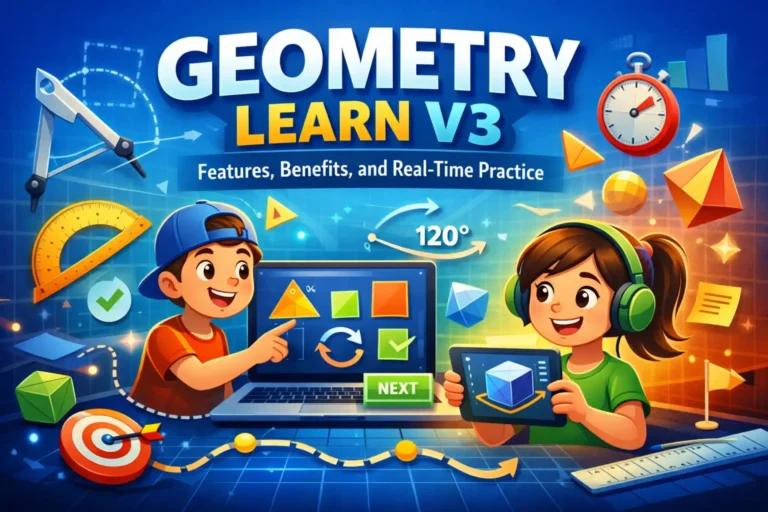
Introduction to Geometry Learning V3
Geometry Learning V3 represents a pivotal shift in the approach to teaching and understanding geometry in educational settings. With an emphasis on modern technology and interactive methodologies, this innovative program aims to significantly enhance students’ engagement and comprehension of geometric concepts. The purpose of Geometry Learning V3 is to transform traditional pedagogical practices into more dynamic, effective learning experiences that cater to the diverse needs of learners in today’s classrooms.
Historically, the teaching of geometry has relied heavily on rote memorization and abstract reasoning. While these methods have their merit, they often fail to connect theoretical principles with real-world applications, leading to a disengagement from the subject. Recognizing this gap, educators have acknowledged the necessity for innovative strategies that foster deeper understanding and retention of knowledge. Geometry Learning V3 addresses these concerns by incorporating interactive elements that facilitate active participation among students.
The evolution of geometry teaching methods reflects a broader shift in educational paradigms, moving from teacher-centered instruction to student-centered learning. This dynamic change underscores the importance of creating an inclusive atmosphere where students can explore concepts collaboratively. Geometry Learning V3 adapts to various learning styles, utilizing digital tools, hands-on activities, and visual aids to present geometric principles in a multifaceted way. As a result, learners are better equipped to connect geometric theory with practical applications, enhancing their problem-solving abilities.
In essence, Geometry Learning V3 not only represents a response to contemporary educational challenges but also serves as a beacon for future developments in mathematics instruction. By integrating innovative techniques and technologies, this approach positions itself as a robust solution for fostering a deeper, more meaningful engagement with geometry.
Key Features of Geometry Learning V3
Geometry Learning V3 presents a series of innovative features designed to enhance the educational experience in geometry. One of the standout aspects is its interactive tools that facilitate engagement and participation among learners. By incorporating various multimedia elements, such as animations and simulations, students can visualize complex geometric concepts that are often challenging to grasp through traditional methods. This hands-on approach is pivotal in making the learning process more appealing and effective.
Moreover, Geometry Learning V3 utilizes adaptive learning techniques that tailor the educational content to meet the specific needs of individual students. Through continuous assessment and feedback mechanisms, the system can identify areas where a learner may struggle and subsequently adjust the material accordingly. This personalization ensures that each student receives the support they require to master geometric principles at their own pace, thus improving overall comprehension.
The integration of technology in Geometry Learning V3 further amplifies its effectiveness. With features that allow for collaborative learning, students can engage with peers in problem-solving activities, share insights, and tackle projects collectively. This not only fosters a sense of community but also encourages diverse perspectives on geometric challenges. The seamless incorporation of software tools aids educators in monitoring progress and providing resources that adapt to the changing needs of their classrooms.
In conclusion, the unique features of Geometry Learning V3—interactive tools, adaptive learning techniques, and technology integration—combine to create a robust framework for simplifying complex geometric concepts. These elements work synergistically to ensure that learners not only understand geometry but also develop a lasting interest in the subject.
Impact on Student Learning Outcomes
The advent of Geometry Learning V3 has been a significant development in educational methodologies, particularly in enhancing student learning outcomes in mathematics. This innovative approach incorporates various pedagogical techniques designed to foster an interactive learning environment. Research has shown that students who engage with the Geometry Learning V3 model exhibit marked improvements in several key areas.
One notable area of impact is problem-solving skills. Through the use of engaging materials and activities, students have demonstrated a greater proficiency in tackling complex geometric problems. The interactive elements of Geometry Learning V3 encourage critical thinking, prompting students to explore different solutions and strategies. Empirical studies indicate that students consistently scored higher on assessments related to geometry after being exposed to this learning model.
Retention of geometric principles has also seen a considerable boost due to the Geometry Learning V3 methodology. Traditional teaching methods often result in short-term memorization rather than long-term understanding. In contrast, Geometry Learning V3 emphasizes conceptual understanding and application. By allowing students to manipulate geometric figures and visualize problems, the learning process becomes more intuitive, leading to improved retention rates of geometric concepts.
Furthermore, the overall academic performance of students utilizing Geometry Learning V3 reflects a trend of increased success. Schools integrating this model report higher average grades in mathematics courses, which correlates with improved engagement levels among students. The emphasis on active learning and real-world application resonates with students, fostering a deeper interest in mathematical studies.
In summary, Geometry Learning V3 significantly enhances student learning outcomes through improved problem-solving skills, better retention of geometric principles, and overall academic performance. As educators continue to leverage this innovative model, it is evident that the impact on student achievement in mathematics is both profound and promising.
The Future of Geometry Education with Learning V3
As we look ahead, the landscape of geometry education stands to be transformed by the capabilities of Geometry Learning V3. This innovative educational platform introduces a plethora of advancements that can significantly enhance the way geometry is taught and understood in both traditional and online classrooms.
One of the most promising developments is the potential redesign of geometry curricula. With an emphasis on interactive and experiential learning, the integration of Geometry Learning V3 could mean a shift towards project-based learning, where students engage in real-world applications of geometric concepts. This approach not only captivates student interest but also deepens comprehension through practical application.
Furthermore, upcoming technologies such as augmented reality (AR) and virtual reality (VR) are set to play a pivotal role in geometry education. These tools provide immersive experiences that allow students to visualize complex geometric theories and interact with mathematical models in three dimensions. Such advancements can demystify challenging concepts, making them more accessible and stimulating for learners. Geometry Learning V3 is likely to be at the forefront, incorporating these technologies into its design to enhance engagement and understanding.
In addition, the implications for educators are significant. As more sophisticated learning tools emerge, teachers will need to adapt their pedagogical approaches, embracing technology not only as a supplementary resource but as a central aspect of geometry instruction. Professional development programs that focus on the incorporation of Geometry Learning V3 and its associated technologies will become essential for educators, ensuring they remain equipped to facilitate advanced learning experiences.
In conclusion, the future of geometry education powered by Geometry Learning V3 suggests a dynamic shift characterized by enhanced curriculum design, the integration of cutting-edge technology, and a redefined role for educators, all aimed at fostering a deeper understanding of geometry among students.





Leave a Reply