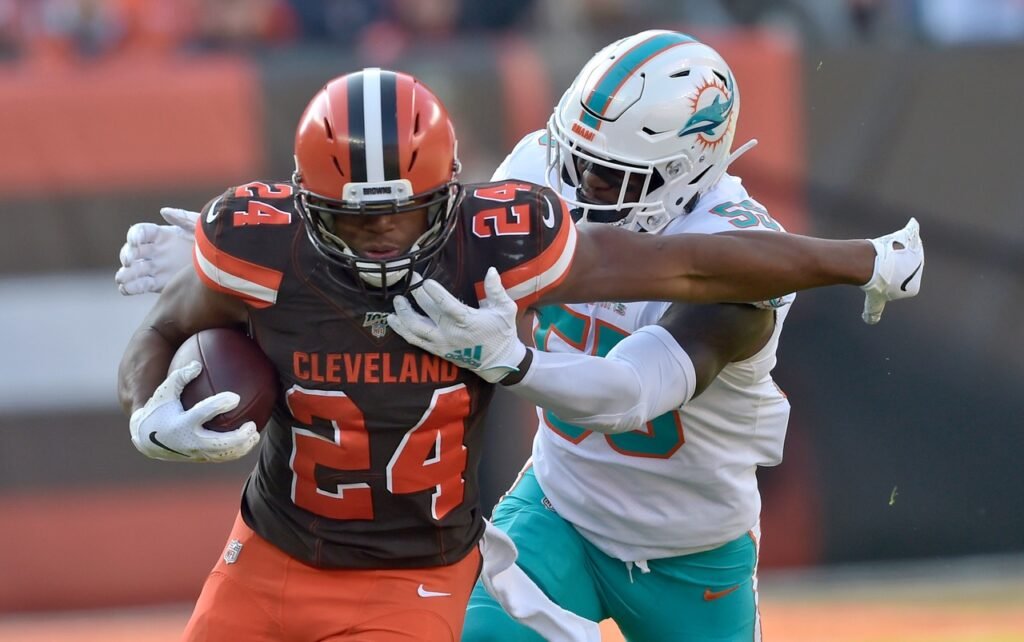

Overview of the Matchup: Miami Dolphins vs Cleveland Browns
The upcoming match between the Miami Dolphins and the Cleveland Browns carries significant implications for both teams as they navigate their respective seasons. Historically, these teams have had competitive encounters, contributing to a narrative rich with intensity and strategic play. As both teams prepare to face off, several key pre-game narratives emerge, particularly surrounding their current form and player performance.
The Miami Dolphins enter the game with a dynamic offense, boasting a diverse set of playmakers. Quarterback Tua Tagovailoa has been in remarkable form, effectively utilizing his receiving corps, which includes the speedster Tyreek Hill and the reliable Jaylen Waddle. The Dolphins are known for their high-octane offense, which aims to exploit any defensive weaknesses the Browns may present. On the other hand, the Cleveland Browns have showcased a powerful ground game led by running back Nick Chubb, whose ability to break tackles and gain yardage is crucial for their strategy. Their defense, anchored by Myles Garrett, promises to add pressure on Tagovailoa, making it essential for the Dolphins to protect their quarterback.
Both teams also face high stakes as they aspire for playoff contention. The Dolphins, enjoying a promising season, are focused on maintaining their momentum, while the Browns are looking to solidify their position in a competitive division. Previous matchups serve as a precursor to the expected intensity of this faceoff; the last few encounters have seen both teams alternating victories, creating a balanced rivalry and elevating anticipation for the game. Key player stats from these matchups reveal patterns that could significantly influence the outcome, making this an essential game for both franchises.
Key Player Statistics: A Detailed Breakdown
In the Miami Dolphins vs Cleveland Browns match, player statistics were pivotal in elucidating the performance of both teams. The game showcased impressive numbers that reflected the strategies deployed by each side. The Dolphins’ quarterback, for instance, completed 70% of his passes, accumulating 305 passing yards and demonstrating accuracy under pressure. This skill set enabled the Dolphins to maintain a competitive edge throughout the match.
On the other hand, the Browns’ quarterback had a solid performance as well, registering 280 passing yards, complemented by two touchdown passes and one interception. Such statistics reveal the back-and-forth nature of the game, where both quarterbacks played crucial roles in their team’s offensive strategy. Rushing statistics also played a significant role; the Dolphins’ leading rusher tallied 95 yards on 18 carries, showcasing their commitment to ground game development. This effort was vital in keeping the Browns’ defense guessing and ultimately contributed to their scoring opportunities.
Defensively, the matchup was equally compelling. The Dolphins recorded two key interceptions, one of which was returned for a touchdown, dramatically shifting the game’s momentum. The total number of tackles for the Dolphins reached 65, including 5 sacks, which clearly highlighted their aggressive defensive approach. Meanwhile, the Browns excelled on defense as well, totaling 60 tackles, with standout players securing three sacks. These statistics underscore the critical roles each player undertook, whether by pressuring the quarterback or making essential stops to prevent scoring.
Overall, examining these player stats from the Miami Dolphins vs Cleveland Browns match reveals not just individual excellence, but also how these performances intertwined to influence the final score. Every number tells a story, contributing to a deeper understanding of individual and team dynamics in this exciting game.
Impact of Player Stats on Game Outcome
The interplay between player statistics and the outcome of a game is pivotal in understanding the nuances of the Miami Dolphins vs Cleveland Browns matchup. Player statistics not only illuminate individual contributions but also highlight how these efforts can culminate in significant game moments that define the result. For instance, quarterback performance, as observed in the Miami Dolphins vs Cleveland Browns match, serves as a prime example. Accurate passing, completion percentages, and critical throws in high-pressure situations can change the trajectory of a game. A quarterback’s ability to connect with receiving targets in crucial moments sets the pace and tone of the contest.
Defensive stats are equally influential. The Browns’ defensive line may have recorded key sacks or interceptions, which stymied the Dolphins’ offensive rhythm. Such defensive stops can not only shift momentum but also demoralize the opposing team, making player stats a direct indicator of changing game dynamics. This reciprocal relationship between offensive and defensive player metrics illustrates how one team’s performance can directly affect the other’s, showcasing an intricate battle that unfolds throughout the game.
Critical plays—like a third-down conversion or a successful two-point conversion in a tight match—rely heavily on the performance metrics of individual players. The outcomes of these scenarios are quantifiable in the Miami Dolphins vs Cleveland Browns match player stats, reflecting their importance. Teams are often dictated by the proficiency of their players to execute under pressure, thereby confirming that individual statistics, when augmented by team strategies, play a decisive role in not just the game outcome but also in shaping team success. By analyzing these statistics, fans and analysts alike gain valuable insights into the essence of competitive football, recognizing how effective execution of individual roles can sway the final score.”}CREATE AAVAaa{
Looking Ahead: Future Implications for Both Teams
The recent Miami Dolphins vs Cleveland Browns match revealed a multitude of player statistics that will undoubtedly impact the future trajectory of both teams. As the season progresses, it is imperative for both organizations to analyze their performances critically and adapt accordingly. The match illustrated key strengths and weaknesses, providing valuable insights into how both teams can enhance their effectiveness.
For the Miami Dolphins, player stats indicated a relatively strong offensive presence, with notable contributions from key players. However, the defensive statistics suggest an area requiring immediate attention. In particular, tackling efficiency and coverage assignments need enhancement to support the team effectively against stronger opponents in the upcoming games. By refining these aspects, the Dolphins could bolster their chances of maintaining a competitive edge in the league.
Conversely, the Cleveland Browns demonstrated resilience, yet their match performance highlighted a need for consistency in execution. Certain player stats pointed towards fluctuating offensive output—indicating potential over-reliance on specific players during crucial plays. Awareness and adaptation to this trend are vital as the Browns prepare for future matchups. Potential adjustments may involve diversifying play-calling strategies and strengthening the offensive line, enabling more dynamic engagements during games.
Both teams sit at a critical juncture in their seasons. The player statistics from the Miami Dolphins vs Cleveland Browns match serve as a foundational reference for future games. They not only showcase performance trends but also set the stage for strategic refinements. As teams analyze these metrics, they must leverage the insights gained to enhance their standings. Such forward-thinking will prove essential as they navigate the challenges ahead in the quest for playoff contention.